It can. Kitchen remodels consistently rank among the highest-ROI home improvements, with minor midrange remodels in Los Angeles recouping an average of 126.9% of their cost at resale — well above the national average.
This guide covers the transformation types that deliver the most dramatic results, the specific design elements that drive those changes, and how to plan a remodel that fits your home in LA or Ventura County. It's not a DIY guide. It's a design education — helping you understand what's possible before you start a professional remodel.
Key Takeaways
- Transformations hit hardest when they address at least two of: poor lighting, dated finishes, a closed layout, and inadequate storage
- Cabinet updates — painting, refacing, or full replacement — deliver the highest visual impact per dollar spent
- Update countertops, backsplash, and lighting together; one alone rarely creates the coherence all three do
- Layout changes produce the most emotionally striking before-and-after results of any single improvement
- A design-build contractor keeps decisions coordinated and eliminates costly gaps between design and construction
Signs Your Kitchen Is Ready for a Transformation
Many homeowners live with kitchen frustrations for years without recognizing them as fixable design problems. Some are obvious. Others are so familiar they've become invisible.
Common visual red flags:
- Dark-stained oak or cherry cabinets that absorb light rather than reflect it
- Laminate countertops peeling at seams or showing heat damage
- 12×12 beige tile or patterned vinyl flooring that anchors the space in the past
- A single overhead light fixture that casts shadows across every work surface
- Dated brass fixtures paired with builder-grade hardware
This is particularly relevant for LA and Ventura County homeowners: roughly 17.5% of Los Angeles County housing units and 25.8% of Ventura County units were built in the 1980s or 1990s, meaning a large portion of local kitchens share these exact characteristics. Those same decade-old kitchens often carry functional problems alongside the dated finishes.
Functional Red Flags Are Just as Important
Visual issues get noticed immediately. Functional problems get tolerated, which makes them easy to miss during a self-assessment.
Watch for these layout-driven frustrations:
- Two people cooking at the same time means constant collision
- No clear prep zone separate from the cooking zone
- The dishwasher sits far from the sink, making cleanup inefficient
- The refrigerator placement blocks traffic flow or forces awkward U-turns
Cosmetic vs. Structural: Which Does Your Kitchen Need?
This distinction shapes your entire planning approach. The two paths look very different:
- Surface refresh: New cabinet paint, countertops, backsplash, and updated lighting. The bones are sound; the surfaces are tired.
- Layout intervention: Removing a wall, repositioning the island, relocating a sink. Required when functional frustrations — not just aesthetics — drive the dissatisfaction.
If functional frustrations dominate your list, a cosmetic refresh alone won't resolve them. Knowing which category your kitchen falls into before meeting with a contractor keeps the project scoped correctly from day one.
The Most Impactful Before & After Kitchen Transformation Types
The Dark-to-Bright Transformation
Few before-and-after shifts feel as dramatic as this one. A cave-like kitchen — dark stained cabinets, black granite, a single recessed light — becomes an airy, light-filled space that feels twice as large.
The key moves:
- Repaint or replace cabinets in warm white, cream, or soft sage
- Swap dark countertops for quartz or marble-look surfaces
- Add under-cabinet lighting strips to eliminate countertop shadows
- Where possible, enlarge a window or add a skylight to bring in natural light
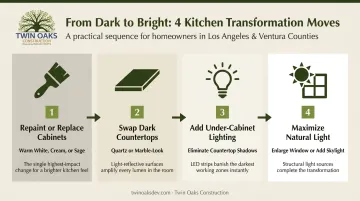
The result changes how the kitchen feels to use every day — not just how it looks in photos.
The Closed-Off to Open-Concept Transformation
Removing a non-load-bearing wall between the kitchen and a dining or living area produces some of the most striking transformations in residential remodeling.
The before: an isolated kitchen with blocked sightlines, no connection to the rest of the home. The after: seamless visual flow, natural light distribution throughout adjacent spaces, and a perceived square footage increase without touching the footprint.
This is especially popular in Southern California, where indoor-outdoor flow and entertaining space are core lifestyle values. According to Houzz's 2025 Kitchen Trends Study, 53% of renovating homeowners modified their kitchen configuration, with many borrowing space from adjacent dining or living rooms.
One important nuance: open concept is evolving. Buyers increasingly want flexible connection — not total openness — so full wall removal isn't always the right answer. Partial openings, pass-throughs, or strategic sightline improvements can achieve similar results with less structural disruption.
The Dated-to-Modern Transformation
This is the classic builder-grade kitchen scenario: a 1990s L-shape with oak cabinets, laminate countertops, brass fixtures, and vinyl flooring. Functional. Never stylish. Never yours.
The after photo typically includes:
- Two-tone shaker cabinets (a lighter upper, darker or wood-tone lower)
- Quartz countertops in a marble-look or solid matte finish
- A statement range hood as an architectural focal point
- Subway tile backsplash extending to the ceiling
- Matte black or brushed nickel hardware throughout
No walls moved. No plumbing relocated. The transformation is surface-level — and it consistently produces the highest visual return for the investment.
The Cramped-to-Functional Transformation
This one is less about aesthetics and more about reclaiming how the kitchen actually works.
The before: a peninsula that creates a dead-end traffic pattern, no room to plate and prep simultaneously, upper cabinets that stop at 7 feet and waste 18 inches of vertical storage above.
The after achieves:
- A properly sized freestanding island with seating on one side
- Dedicated cooking and prep zones with appropriate clearance between them
- Custom cabinetry taken to ceiling height for maximum storage
- Appliances repositioned to support natural workflow
These transformations typically involve plumbing or electrical reconfiguration. They require licensed professionals — and they reward careful planning.
The Cosmetic Refresh That Punches Above Its Weight
Not every transformation requires demolition. When a kitchen's bones are solid but its surfaces are tired, a targeted refresh can produce a compelling before-and-after at a fraction of full-remodel cost.
What a strong cosmetic refresh includes:
- Cabinet painting or door replacement with new hardware
- New backsplash (zellige, vertical subway, or a full-height slab behind the range)
- Updated pendant lights and under-cabinet LED strips
- Open shelving added to one section for visual interest
- New faucet and sink
Even this scope benefits from a professional eye. Material cohesion — making sure the backsplash, countertop, cabinet color, and hardware finishes work together — requires experience reading how finishes interact under different lighting conditions, something that's easy to misjudge from material samples alone.
Design Elements That Create the Most Dramatic Results
Cabinets: The Anchor of Every Kitchen Transformation
Cabinets occupy more visual real estate than any other element in a kitchen. Their condition and color drive the before/after impact more than anything else. According to the 2025 Houzz Kitchen Trends Study, **85% of renovating homeowners upgraded cabinets**, with 69% opting for full replacement.
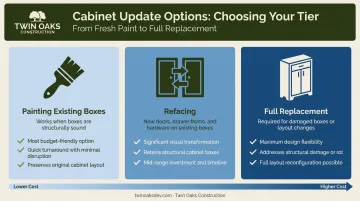
Your options, from most budget-friendly to most comprehensive:
- Painting existing boxes — most cost-effective; works best when cabinet boxes are structurally sound
- Refacing — new doors, drawer fronts, and hardware on existing boxes; significant visual change at moderate cost
- Full replacement — highest cost, most design flexibility, required when boxes are damaged or layout changes are needed
On color: Shaker-style doors dominate current preferences, appearing in 61% of renovated kitchens per Houzz 2025. White cabinets remain popular at 33%, but white oak and warm wood-grain finishes have overtaken painted options as the top choice according to NKBA's 2025 report.
Navy, sage green, and natural wood tones read as current. Older honey oak can feel dated, though when modernized with updated hardware and countertops, some designers are bringing it back intentionally.
Countertops and Backsplash: The Cohesive Pair
These two elements are almost always chosen together in high-impact renovations — and for good reason. A mismatched countertop-and-backsplash combination can undermine even a well-executed cabinet update.
Current countertop choices break down as follows:
- Engineered quartz leads at 39% of renovated kitchens (Houzz 2025), down from 46% in 2024 but still dominant
- Granite has declined to 19% and continues falling
- Quartzite is gaining momentum — Zillow reports homes mentioning quartzite sell for 5.3% more than expected
For backsplash, the moves generating the strongest before/after impact are:
- Full-height coverage behind the range (12% of renovators extend to the ceiling, and those kitchens show up in every magazine)
- Zellige and handmade tile for organic texture and a handcrafted feel
- Vertical subway tile layouts for contemporary proportion
- Full-height stone slab for a seamless, premium look
If budget allows just one splurge in this category, full-height coverage behind the range delivers the most visible payoff per dollar spent.
Lighting: The Most Underestimated Transformation Tool
Before photos almost always share one lighting problem: a single overhead fixture with inadequate wattage. After photos layer three distinct light types:
- Ambient — recessed lighting throughout the ceiling (73% adoption in renovated kitchens)
- Task — under-cabinet LED strips illuminating work surfaces (71% adoption)
- Accent/Decorative — pendant lights over islands that also serve as sculptural design statements
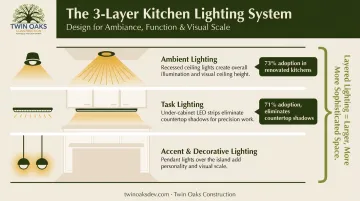
The result of layering all three is a kitchen that reads as larger and more sophisticated. Homeowners who've lived with a single overhead fixture are often the most surprised by how much the right lighting plan transforms the space.
Pendant selection also matters beyond function. The right fixture adds personality and visual scale, often becoming the most discussed design element in a finished kitchen.
Islands and Layout Flow
The island (or lack of one) defines a kitchen's social function. Peninsulas create barriers; freestanding islands promote conversation and traffic flow from multiple directions.
Island best practices:
- Maintain 36–42 inches of clearance on all sides
- Size the island to the room — oversized islands in smaller kitchens make traffic worse, not better
- Build in multiple functions: prep surface, seating overhang, storage below, and optionally a secondary prep sink
In before/after comparisons, peninsula-to-island conversions tend to surprise homeowners most. The functional change, opening sightlines and circulation on all sides, often matters more than the visual one.
Flooring: The Foundation of the After Photo
Once cabinets, countertops, and lighting are addressed, flooring is the final layer that ties everything together, or quietly undermines it. Vinyl, patterned linoleum, or small-format beige tile dates a kitchen regardless of what else has changed.
Current top choices:
- Wide-plank hardwood or wood-look LVP for warmth and seamless flow into adjacent rooms
- Large-format porcelain tile (24×24 or larger) for a clean, modern look
- Classic herringbone in hardwood or tile for timeless character
In open-concept kitchens, flooring that flows continuously from kitchen into living areas amplifies the spacious, connected feel that's central to the transformation.
Layout Changes That Maximize Kitchen Functionality
Three layout interventions consistently appear in the most dramatic before/after transformations:
- Removing a non-load-bearing wall between the kitchen and dining or living area — increases perceived space and natural light distribution
- Converting a peninsula to an island — eliminates the traffic bottleneck and opens the kitchen to the adjacent space
- Repositioning the sink beneath a window — brings in natural light, improves ergonomics, and creates a more pleasant daily experience
All three require licensed professionals — load-bearing assessments need a structural engineer, sink relocation involves plumbing permits, and electrical changes require a licensed electrician. None of these are DIY decisions.
Smaller layout adjustments also matter more than homeowners expect:
- Moving a refrigerator out of a corner into a more logical position
- Raising upper cabinets to the full ceiling height
- Adding a dedicated coffee or appliance nook to clear counter space
These practical adjustments set the stage for a larger consideration unique to Southern California: sightlines toward a backyard or patio. Orienting the kitchen toward outdoor views deserves priority in the planning phase — not as an afterthought once walls are already framed.
Twin Oaks Construction's approach to kitchen remodels in LA and Ventura Counties is built around this lifestyle-driven thinking — where the kitchen's relationship to the rest of the home drives layout decisions before a single cabinet is selected.
How to Plan and Budget Your Kitchen Remodel
The Remodel Sequence
Understanding the order of operations helps set realistic expectations for timeline and decision-making:
- Design and planning
- Demolition
- Rough work (plumbing, electrical, HVAC)
- Drywall and subfloor
- Cabinet installation
- Countertops and backsplash
- Appliances
- Fixtures, lighting, and hardware
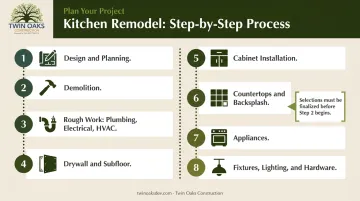
Material selections for Steps 6–8 need to be finalized before Step 2 begins. Delays in decisions are the most common cause of extended timelines.
Realistic Budget Context for LA and Ventura County
According to JLC's 2025 Cost vs. Value Report for Los Angeles:
| Scope | LA Job Cost | LA Resale Value | Recoup Rate |
|---|---|---|---|
| Minor Midrange | $29,765 | $37,768 | 126.9% |
| Major Midrange | $86,214 | $49,079 | 56.9% |
| Major Upscale | $171,369 | $65,023 | 37.9% |
Minor kitchen updates return 126.9% at resale in LA — the strongest ROI of any remodel scope. Major and upscale projects cost significantly more but recover less, making them better evaluated as quality-of-life investments.
Always build in a 10–20% contingency buffer (NARI's standard recommendation) for hidden issues — outdated wiring, water damage, or subfloor problems are common in 1980s and 1990s-era homes and can't always be predicted before demo begins.
Choosing the Right Contractor
Budget clarity only gets you so far — who you hire determines whether the project runs on time, on scope, and without surprises. The questions worth asking before hiring:
- Do they handle design and construction under one roof?
- How do they communicate during the project — and how often?
- Can they show documented before-and-after examples of comparable work?
- Do they use quality materials, or are they cutting costs where you can't see it?
- How do they handle scope changes and unexpected discoveries?
Twin Oaks Construction has worked with homeowners across LA and Ventura Counties for over 20 years, managing projects from initial design through final installation. Their portfolio is available at twinoaksdev.com/latest-projects if you want to see comparable project examples before reaching out.
Frequently Asked Questions
Is $50,000 enough for a kitchen remodel?
Yes — $50,000 can cover a comprehensive mid-range to upper-mid-range remodel in most LA and Ventura County homes, including new cabinets, countertops, backsplash, appliances, and updated lighting. The final scope depends on kitchen size, whether any layout changes are needed, and material selections. A design consultation clarifies what's achievable at your specific budget.
What cabinet color is outdated?
Older honey oak finishes are most commonly associated with a dated look, and raised-panel door profiles read as less current than flat or Shaker-style doors — regardless of color. Repainting or refacing rather than full replacement can address both issues for a fraction of the cost.
What is the most impactful single change in a kitchen remodel?
Cabinet updates — paint, reface, or full replacement — consistently deliver the most visible before-and-after transformation because they cover the largest surface area in the kitchen. Countertop replacement combined with a new backsplash is a close second, particularly when the backsplash extends to ceiling height.
How long does a kitchen remodel typically take?
A cosmetic refresh takes roughly 2–4 weeks. A midrange remodel runs 4–8 weeks. A full remodel with layout changes and updated systems typically takes 8–12 weeks or more, depending on material lead times and contractor scheduling. Planning and design add approximately 4 weeks before construction begins.
Do I need to move out during a kitchen remodel?
Most homeowners stay in place, but expect real disruption — particularly during demo and cabinet installation. Setting up a temporary kitchen station (microwave, mini fridge, coffee maker) helps, and a well-organized contractor will keep you informed so you can plan around the most disruptive phases.
What kitchen remodel updates add the most resale value?
Minor midrange kitchen remodels return 126.9% of cost in Los Angeles — the strongest ROI of any kitchen scope. Cabinet updates, quality countertops, and layout improvements appeal most to buyers, and NAR research shows that a visibly dated kitchen can prompt buyers to deduct far more from an offer than the actual repair cost warrants.