According to the 2025 U.S. Houzz Bathroom Trends Study, 46% of homeowners cite outdated style as their primary renovation trigger — and the most dramatic transformations consistently involve more than a coat of paint. They involve intentional choices about space, materials, and light.
This guide covers five types of dramatic bathroom makeovers, the design decisions that create the biggest visual impact, and exactly how to plan your remodel so nothing gets expensive in the wrong order.
Key Takeaways
- Transformative bathrooms typically combine changes to layout, materials, and lighting — not just one
- Tub-to-shower conversions rank among the most spatially transformative upgrades available
- Lighting appears in 82% of renovations — and it's the most underestimated design element
- LA midrange bathroom remodels recoup 89.6% of cost at resale
- $10,000 covers a cosmetic refresh in LA, not a full gut renovation
What Separates a Dramatic Bathroom Remodel From a Basic Refresh
Swapping out a mirror or painting the walls is a refresh. A truly dramatic remodel changes how the room feels — its perceived size, its atmosphere, its function.
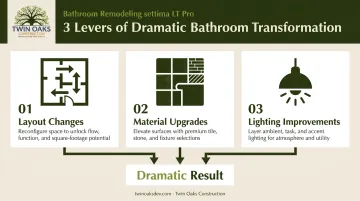
Three levers create before-and-after results that stop people mid-scroll:
- Layout changes — removing walls, reconfiguring fixtures, or converting a tub-shower combo into a dedicated shower
- Material upgrades — tile, countertops, vanity, and flooring that shift the visual weight of the room
- Lighting improvements — recessed fixtures, vanity sconces, and mirrors that change how the space reads at any hour
The most stunning transformations address at least two of these simultaneously. A new vanity alone reads like a furniture swap. A new vanity paired with floor-to-ceiling tile and proper sconce lighting reads like a different room entirely.
The before-and-afters that generate the strongest reactions share one trait: they solve a functional problem and make a deliberate visual statement. The projects that do only one tend to feel half-finished — and homeowners usually notice within a year.
Before & After Inspiration: 5 Types of Dramatic Bathroom Makeovers
Bathroom transformations tend to fall into recognizable categories based on the problem being solved. Here are the five that generate the most dramatic results.
From Cramped Shower-Tub Combo to Walk-In Shower Sanctuary
Before: A tight tub-shower combination that divides an already small room, with a curtain rod, a sloped ceiling above the tub, and zero sense of openness.
After: Walls reconfigured or removed to create a dedicated walk-in shower with large-format tile, frameless glass, and a built-in niche. The room feels twice the size without adding a square foot.
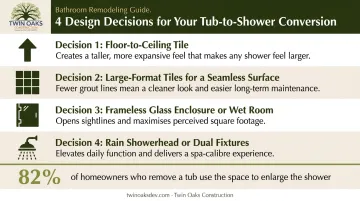
This is one of the most requested transformations — and the data backs it up. The 2025 Houzz study found that 25% of renovating homeowners remove their bathtub, and 82% of those use the space to enlarge the shower. NKBA's 2026 trends report shows 55% of design professionals consider larger shower size more important than having a tub in a primary bath.
The design decisions that make this transformation dramatic:
- Extend tile floor-to-ceiling to draw the eye upward and maximize perceived height
- Choose large-format tiles to minimize grout lines and create a seamless, expansive surface
- Install a frameless glass enclosure — or skip it entirely for a wet room — to eliminate visual barriers
- Add a rain showerhead or dual fixtures for a hotel-grade shower experience
From Dark and Dated to Bright, Spa-Inspired Escape
Before: Dark paint or floral wallpaper, a single overhead fixture casting flat light, dated brass hardware, and a bulky vanity cabinet that blocks every ray of natural light.
After: A neutral or warm white palette, layered lighting with recessed fixtures and flanking sconces, a floating vanity, and a large mirror that bounces light to every corner.
Lighting is the single most underestimated element in bathroom renovation. 82% of renovated bathrooms include lighting upgrades, with recessed fixtures appearing in 40% and sconces in 34%.
Replacing a builder-grade overhead light with two wall-mounted sconces positioned at eye level on either side of the mirror eliminates shadows entirely — creating the even, flattering illumination you associate with hotel bathrooms. The floating vanity reinforces this effect: by revealing floor space beneath it, the room reads larger without any structural change.
From Builder-Grade Basics to Boutique Hotel Aesthetic
Before: Stock oak vanity, hollow-core door, basic white subway tile with yellowed grout, chrome fixtures that don't match, and a builder-grade mirror still in its original hardware-store frame.
After: A semi-custom or furniture-style vanity with quartz countertop, statement floor tile (herringbone, penny round, or large-format stone-look), matte black or brushed gold fixtures throughout, and a framed or backlit mirror that anchors the wall.
This transformation delivers high visual drama without structural changes — keeping costs moderate. Two decisions drive the impact:
- Commit to a single hardware finish across every fixture and accessory
- Choose at least one tile that functions as a focal point, not just background
Twin Oaks Construction's architecture and design team works with homeowners to finalize these material selections before demolition begins — preventing the costly mid-project "this doesn't look right together" discovery.
From Outdated Master Bath to Luxurious Primary Retreat
Before: A large primary bathroom with a corner soaking tub that's used maybe twice a year, a dated double vanity with mismatched mirrors, and tile that made sense in 2005.
After: The corner tub repositioned or removed and replaced with an expanded walk-in shower. A redesigned double vanity with coordinated mirrors and cohesive tile connecting floors and walls.
Primary bathroom remodels carry real financial weight. According to JLC/Zonda's 2025 Cost vs. Value report, Los Angeles midrange bathroom remodels recoup 89.6% of their cost at resale — well above the national average of 80%.
The upgrades that move the needle most in this category:
- Replace the underused soaking tub with an expanded walk-in shower
- Coordinate mirrors and vanity cabinetry across the double-sink layout
- Use continuous tile across floors and shower walls to unify the space visually
From Forgotten Half Bath to a Bold Statement Space
Before: A neglected powder room with a pedestal sink, bare walls, a basic mirror, and a single overhead fixture.
After: Dramatic wallpaper or floor-to-ceiling patterned tile, a statement vessel sink on a floating vanity, a distinctive framed or round mirror, and layered lighting — all within 30–50 square feet.
Powder rooms are ideal candidates for design risks that would feel overwhelming in a full bathroom. Dark paint, patterned tile, and unique fixtures work precisely because the space is small. According to Angi's 2026 data, a half bath or powder room remodel runs approximately $2,250–$3,000 — a fraction of a full bathroom renovation. Lower material costs mean bolder choices become financially accessible.
The Design Elements That Drive the Most Stunning Before & Afters
Tile Selection and Placement
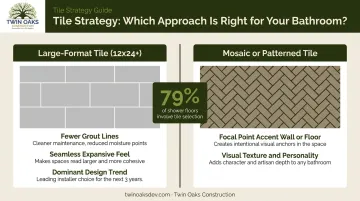
Tile is involved in 79% of shower floors, and its choice shapes the entire visual character of the room. Two distinct strategies work well:
- Large-format tile (12x24 or larger): Fewer grout lines create a seamless, expansive feel. 80% of design experts expect large-format flooring to be the dominant trend over the next three years.
- Mosaic or patterned tile as a focal point: Penny round, herringbone, or geometric patterns work best as accent walls or floors, grounding the room with visual texture.
HGTV notes that floor-to-ceiling tile makes small bathrooms read larger — a reliable visual trick that costs more in materials but pays back in perceived square footage.
Vanity, Countertop, and Hardware
Swapping a bulky, dated vanity for a floating or furniture-style version is the fastest way to modernize a bathroom's silhouette. The countertop material matters too — quartz edges out laminate not just aesthetically but in durability and perceived value.
Hardware finish is where many renovations fall short. Committing to one finish — matte black, brushed nickel, or unlacquered brass — across faucets, towel bars, shower fixtures, and light fittings creates the cohesion that separates polished results from piecemeal ones.
Lighting and Mirrors
91% of design professionals consider lighting quality a top priority, and 92% say task lighting is essential in primary bathrooms. Poor lighting undermines even excellent tile and vanity choices.
The mirror amplifies everything. Adding multiple mirrors or a large double-vanity mirror dramatically increases perceived room size — Architectural Digest confirms that mirrors create a sense of expanded space when positioned to reflect light sources. 34% of renovated bathrooms now include specialty mirror features like integrated LED lighting or anti-fog systems.
Layout and Spatial Changes
Moving a toilet's position, removing a non-structural wall, or converting a tub-shower combo can change a bathroom's perceived size without adding a single square foot. These changes require permits, plumbing work, and licensed contractor coordination. The spatial payoff, though, consistently outperforms any cosmetic update done in the same budget range.
How to Plan Your Bathroom Remodel in the Right Order
The sequence of a bathroom remodel isn't flexible. Getting it wrong means tearing out work you just paid for.
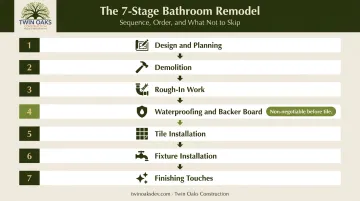
The correct order:
- Design and planning — finalize layout, fixtures, tile selections, and lighting placement before anything else
- Demolition — remove existing fixtures, tile, and any walls being reconfigured
- Rough-in work — plumbing, electrical, and ventilation adjustments
- Waterproofing and backer board — non-negotiable before any tile goes down
- Tile installation — floors first, then walls
- Fixture installation — toilet, vanity, tub or shower
- Finishing touches — mirrors, lighting fixtures, hardware, paint, accessories
Certain decisions must be finalized before demo begins — changing them mid-project is the most common cause of budget overruns:
- Tile selections
- Vanity dimensions
- Plumbing rough-in locations
- Lighting layout
Twin Oaks Construction manages this entire sequence for LA and Ventura County homeowners — coordinating every phase and subcontractor so you always know what's happening and when, without having to run it yourself.
What Does a Dramatic Bathroom Remodel Cost in LA and Ventura Counties?
Southern California costs run higher than national averages. Here's a realistic framework:
| Scope | National Average | Los Angeles Estimate |
|---|---|---|
| Cosmetic refresh | $2,500–$10,000 | $5,000–$15,000 |
| Midrange remodel | $12,141 avg. | $27,143 |
| Upscale renovation | $81,612 avg. | $85,055 |
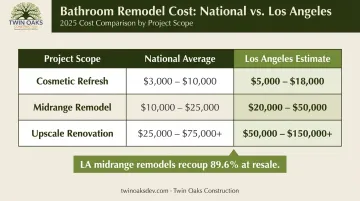
Sources: Angi 2026, JLC/Zonda 2025 Cost vs. Value (Los Angeles)
What $10,000 Covers in LA
In the Los Angeles market, $10,000 is a cosmetic or partial-scope budget — not a full gut renovation. Realistic scope at this range:
- New vanity and countertop
- Updated tile flooring
- Fixture replacements (toilet, faucet, hardware)
- Lighting upgrade and new mirror
- Fresh paint
What it won't cover: moving plumbing, reconfiguring layouts, full tile installation from floor to ceiling, or premium natural stone materials.
What Pushes Costs Higher
Once you move beyond cosmetic updates, several factors can push the budget significantly:
- Relocating plumbing or electrical
- Structural changes (removing walls)
- Custom or semi-custom vanity vs. stock
- Natural stone tile vs. porcelain
- Permit requirements (cosmetic remodels typically don't require a plan check under LADBS guidelines, but structural changes trigger a separate permit path)
Twin Oaks Construction works with LA and Ventura County homeowners to build accurate estimates based on actual project scope — so there are no budget surprises once work begins. A free consultation is the first step.
Frequently Asked Questions
Is $10,000 enough for a bathroom remodel?
In most markets, $10,000 covers a cosmetic to mid-range refresh — new vanity, tile flooring, fixtures, and paint. In Los Angeles, where a midrange remodel averages $27,143, $10,000 is realistically a partial or cosmetic scope and is not sufficient for a full gut renovation with plumbing relocation or layout changes.
In what order should a bathroom remodel be done?
The correct sequence is: design and planning → demolition → rough-in (plumbing and electrical) → waterproofing and backer board → tile installation → fixture installation → finishing touches. Skipping or reversing steps — especially waterproofing before tile — is the most common cause of costly rework.
What is the most impactful single change in a bathroom remodel?
Replacing the vanity and improving lighting delivers the most visible transformation per dollar spent. For spatial impact, converting a tub-shower combo to a dedicated walk-in shower changes how the entire room looks and functions.
How long does a dramatic bathroom remodel typically take?
A cosmetic refresh takes 2–4 weeks; a mid-range remodel runs 4–8 weeks; a full primary bathroom renovation can take 6–12 weeks. Factor in permits, material lead times, and subcontractor scheduling, and the full process — including pre-construction planning — typically spans 2–3 months.
Does remodeling a bathroom increase home value?
Yes. According to JLC/Zonda's 2025 Cost vs. Value report, a midrange bathroom remodel in Los Angeles recoups 89.6% of its cost at resale — compared to 80% nationally. Upscale renovations recoup significantly less (42.3%), making mid-range the stronger investment for most homeowners.
What's the difference between a cosmetic update and a full remodel?
A cosmetic update replaces surfaces and accessories — paint, hardware, mirror, lighting — without touching plumbing or structure. A full remodel includes new plumbing rough-in, tile installation, vanity replacement, and potentially layout changes.