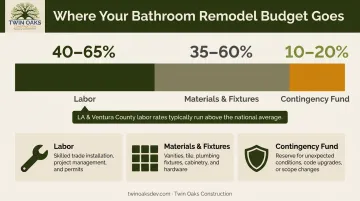
The confusion is understandable. Price quotes vary wildly, design trends shift constantly, and it's genuinely hard to know what's driving costs versus what's just contractor markup. Many homeowners also don't realize that labor alone typically eats up 40–65% of the total budget before a single tile is purchased.
This guide cuts through that uncertainty. You'll find 2026 cost benchmarks, a clear breakdown of the factors that push projects over budget, the design trends worth pursuing (and some that aren't), and practical guidance on making decisions that protect your investment — whether you're in Los Angeles, Ventura County, or anywhere in between.
Key Takeaways
- Bathroom remodels in 2026 typically cost $7,000–$30,000+, depending on scope and material choices
- Labor accounts for 40–65% of the total budget, making contractor selection a critical cost decision
- Spa-inspired design, natural materials, and smart technology define the dominant aesthetic direction for 2026 bathrooms
- Vanity upgrades, walk-in showers, and quality flooring consistently deliver strong ROI in high-value markets like LA and Ventura Counties
- Per Houzz, 84% of bathroom renovators hire professionals; just 4% go fully DIY
What Does a Bathroom Remodel Cost in 2026?
National Cost Benchmarks
According to HIRI's 2025 Project Decision Study, the national median bathroom remodel spend sits at $7,800, with a mean of $12,061. The 2025 Houzz Bathroom Trends Study shows a slightly higher $13,000 median across all bathroom types — and $22,000 median for major remodels that include a shower upgrade.
These averages typically cover fixtures, tile, vanity, and basic labor. They typically exclude structural changes, permit fees, unexpected repairs discovered during demo, and premium material upgrades.
Cost by Bathroom Type
| Bathroom Type | Typical Cost Range | What Drives the Difference |
|---|---|---|
| Half bath / powder room | $1,500 – $10,000 | No shower or tub; smaller footprint |
| Small or guest bathroom | $7,000 – $20,000 | Full fixture set, tile work, standard layout |
| Primary / master bathroom | $20,000 – $50,000+ | Larger square footage, higher-end finishes, more plumbing complexity |
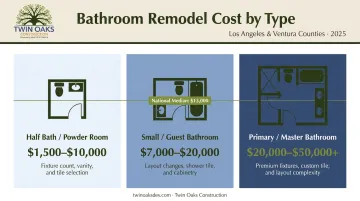
For large bathrooms over 100 square feet, Houzz data puts the median spend at $25,000 — a useful benchmark for primary baths in LA and Ventura County homes.
Cost Per Square Foot
A quick budgeting method is to estimate by square footage:
- Basic remodel: $70–$120/sq ft
- Mid-range remodel: $120–$200/sq ft
- Luxury remodel: $200–$250+/sq ft
This approach works as a rough sanity check, but it has real limitations. It doesn't account for layout changes, plumbing relocation, or hidden issues — all of which can push costs well beyond any per-square-foot estimate. That's largely because labor — the biggest variable — isn't captured in any square footage formula.
The Labor vs. Materials Split
HomeAdvisor's 2025 data confirms that labor typically accounts for 40–65% of the total bathroom remodel budget, leaving 35–60% for materials and products. Most homeowners underestimate this ratio — especially once plumbing or electrical enters the picture.
In high cost-of-living markets like Los Angeles and Ventura Counties, skilled trade labor rates run above national averages. BLS wage data for the Los Angeles metro shows tile and stone setters averaging $28.93/hour in wages — and contractor billing rates, which include overhead and profit, typically run 2–3× raw wage figures once overhead and profit are factored in.
What Factors Drive Your Bathroom Remodel Budget?
Bathroom Size
Size is the most direct cost driver. Larger spaces require more tile, more installation hours, more finishing complexity. This is why a primary bathroom in an LA home commands three to five times the budget of a powder room — even with similar material quality.
Plumbing and Electrical Work
Moving or upgrading plumbing drives costs up fast. Shifting a fixture just three or more feet can add $500–$1,000, and relocating a toilet line or converting a tub to a shower requires a licensed plumber at $45–$200/hour nationally. In older Southern California homes, it's common to discover outdated wiring or plumbing that must be brought up to current code before any cosmetic work begins.
Electrical panel replacement — sometimes triggered by bathroom remodels in older homes — adds another $518–$4,500 depending on scope.
Material Tier Selection
The gap between budget-grade and mid-to-high-end materials is substantial:
- Ceramic/porcelain tile: $0.50–$15/sq ft
- Countertops: $1–$190/sq ft (marble/quartz averages $115/sq ft)
- Vanity installation: $400–$2,200
Mid-range finishes deliver the best balance of durability, aesthetics, and resale value. Going budget often means replacing materials sooner; going premium doesn't always recoup the extra spend at resale.
Layout Changes
Moving a toilet, shifting a shower, or removing a wall ranks among the costliest decisions in any remodel. These changes require modifications to plumbing, electrical, and sometimes structural systems, adding both cost and project time. If your existing layout is functional, preserving it is the smarter financial decision.
Hidden Issues and Contingency Planning
Demo reveals surprises. Common findings in older LA and Ventura County homes include:
- Moisture damage and mold behind tile
- Leaking or corroded pipes
- Outdated wiring that doesn't meet current code
Budget a 10–20% contingency as standard practice — NAHB recommends 10%, and Houzz's remodeling budget guidance suggests up to 20% for older homes.
Top Bathroom Design Trends for 2026
Spa-Inspired Design
Open layouts, freestanding soaking tubs, walk-in showers with bench seating, and muted, calming color palettes define the dominant direction in bathroom design right now. The NKBA's 2026 Bath Trends Report confirms that bathroom footprints are growing specifically to accommodate wellness-centered spaces.
Implementation costs vary widely:
- Entry-level: Updated fixtures, neutral palette, frameless shower glass
- Mid-range: Freestanding tub (average $2,500 for the fixture alone), large-format tile, bench seating
- High-end: Steam showers, radiant floor heating ($600–$4,600), custom built-ins
Natural and Biophilic Aesthetics
Earthy tones, stone-look tile, wood-grain accents, and natural light prioritization are displacing the all-white, all-beige bathrooms that Architectural Digest now identifies as aging trends. Biophilic design holds its value precisely because it reads as timeless rather than trend-driven — a real advantage at resale.
These choices also scale across budgets:
- Stone-look porcelain delivers the aesthetic at a fraction of real stone's cost
- Wood-grain tile handles the moisture that actual wood cannot
Smart Technology Integration
The NKBA's 2026 report tracks home technology as a growing priority in bathroom design. Common smart upgrades include:
- Touchless faucets and digital shower controls
- Heated flooring with programmable thermostats
- Smart mirrors with embedded lighting
- Voice-activated or app-connected fixtures
These additions carry real cost — heated floors alone average $1,800 installed. They're increasingly expected in mid-to-high-end remodels. Millennial homeowners — now the dominant buyer demographic — are driving that demand.
Accessibility and Aging-in-Place Design
The 2025 Houzz Bathroom Trends Study found that 68% of bathroom renovators consider special needs, and 47% are designing for future needs. This trend is driven by both aging homeowners (55+) and multigenerational households.
Key features:
- Zero-threshold walk-in showers
- Grab bars styled as design features, not just safety hardware
- Comfort-height toilets
- Wider doorways for wheelchair accessibility
Bold Tile and Statement Surfaces
Large-format tiles, fluted or textured wall tile, and graphic patterned floor tile are replacing standard subway tile as the default aesthetic. Architectural Digest specifically calls out standard subway tile as one of the trends aging homes fastest in 2026.
The strategic value here: statement tile delivers high visual impact at a relatively controlled material cost, especially when used on a single accent wall or floor rather than throughout the entire space.
Bathroom Remodel Cost by Project Scope
Cosmetic Refresh: $3,000–$7,000
A cosmetic refresh updates appearance without touching plumbing, electrical, or layout. It's the right call when the bathroom functions well but looks dated — or when preparing a property for sale without over-investing in renovation costs you won't recoup. Typical work includes:
- New paint, mirrors, and accessories
- Fixture and lighting upgrades
- Prefab vanity replacement
Standard Remodel: $7,000–$20,000
The most common scope nationally, a standard remodel covers shower or tub replacement, new vanity, updated flooring and tile, and upgraded lighting. HomeAdvisor's aggregated data shows a typical range of $6,645–$17,637, aligning with Houzz's $13,000 median for all bathroom types.
This level delivers the best balance between transformation and investment. Most LA-area homeowners targeting resale value or improved daily comfort fall into this range — and it's where material and fixture choices have the most visible impact on the final result.
Full Gut Renovation: $20,000–$50,000+
A gut renovation rebuilds the bathroom from the frame out — new plumbing, updated electrical, layout changes, and premium materials throughout. Houzz data shows 90th-percentile spend reaching $60,000–$70,000 for large primary bathrooms.
This scope makes sense when the bathroom has structural problems, severely outdated systems, or when you're building a true luxury primary suite in a high-value property.
Which Upgrades Deliver the Best ROI?
Walk-In Showers and Core Bathroom Upgrades
According to the JLC 2025 Cost vs. Value Report, a national midrange bathroom remodel costs $26,138 and returns approximately $20,915 at resale — about 80% recouped. That's a strong return compared to most home improvement categories.
NAHB buyer-preference research ranks walk-in showers among the most-wanted bathroom features for today's buyers. Converting an existing tub to a walk-in shower avoids plumbing relocation costs when built in the same footprint — making the ROI calculation even stronger.
Vanity, Lighting, and Mirror Upgrades
These three elements work together as a visual package — and they're what buyers and appraisers notice immediately. A coordinated vanity, lighting fixture, and mirror upgrade can transform the perceived quality of an entire bathroom without touching tile or plumbing.
Typical installation costs for this package:
- Vanity installation: $400–$2,200
- Mirror installation: $159–$470 for standard options
- Lighting fixture swap: $100–$400 (labor only, fixture cost separate)
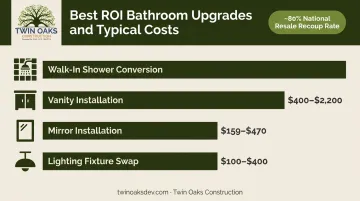
The ROI comes not from the individual pieces but from the cohesive statement they create together.
The LA and Ventura County Market Context
Those national benchmarks tell part of the story — but Southern California operates differently. The 2024 Cost vs. Value data for Los Angeles shows a universal-design bath remodel at a job cost of $41,386 returning $28,670 — approximately 69% recouped, which holds up well given the higher baseline costs in this market.
In high-value markets, a dated or poorly maintained primary bathroom actively suppresses buyer offers and appraiser assessments. Quality finishes protect your asking price — a bathroom that looks 15 years old can cost you far more at negotiation than the remodel would have.
Hiring a Professional vs. DIY: What LA and Ventura Homeowners Should Know
Why Most Homeowners Go Professional
Houzz's 2025 research found that 84% of bathroom renovators hire professionals — and only 4% go fully DIY. The reasons are practical:
- Plumbing and electrical work require licensed trades in California
- Waterproofing failures behind tile cause expensive structural damage
- Permit violations create liability at resale
- The cost of fixing DIY mistakes frequently exceeds the initial savings
California Permit Requirements
California requires permits for any work touching plumbing, electrical systems, or structural elements. In practice, this means most mid-to-large bathroom remodels require permits.
- City of Los Angeles: LADBS handles plan review; electrical permits apply to any installation, alteration, or repair
- LA County: Public Works Building and Safety manages permitting for unincorporated areas
- Ventura County: Applications go through VC Citizen Access; the 2025 Building Code applies to submissions on or after January 1, 2026
Skipping permits carries real consequences. Under California Civil Code Section 1102.6, sellers must disclose additions or alterations made without necessary permits — and under AB 968, flipped properties face additional disclosure requirements. Unpermitted work also exposes contractors to license violations under Business and Professions Code sections 7110 and 7090.
Knowing the permit landscape makes it easier to ask the right questions when choosing who does the work.
What to Look for in a Contractor
When vetting a remodeling contractor in LA or Ventura County, confirm:
- Valid California contractor's license (searchable at CSLB.ca.gov)
- General liability insurance and workers' compensation coverage
- Local project references from comparable bathroom remodels
- Clear written contract with itemized scope of work
Twin Oaks Construction has handled bathroom remodels across LA and Ventura Counties for over 20 years, including permit coordination, licensed trade management, and full project oversight from first consultation to final walkthrough. For homeowners navigating California's permit requirements, working with a contractor who knows the local process reduces both risk and delay.
Frequently Asked Questions
How long does a bathroom remodel typically take?
From initial idea to project completion, Houzz data shows bathroom remodels average 42 weeks total — but this includes planning, material selection, and decision-making, not just construction. Active construction typically runs 6–12 weeks depending on scope and permit timelines.
Does remodeling a bathroom increase home value?
Yes. The 2025 Cost vs. Value Report shows a national midrange bathroom remodel recoups approximately 80% of its cost at resale. In high-demand markets like LA, the actual impact on sale price often exceeds what that percentage implies.
What is the most expensive part of a bathroom remodel?
Labor — particularly plumbing and electrical work — is typically the largest single cost, accounting for 40–65% of the total budget. Shower or tub replacement and custom vanity work are the next highest material costs. Layout changes can dramatically escalate all three.
Do I need a permit for a bathroom remodel in California?
California requires permits for any work involving plumbing, electrical systems, or structural changes. Most mid-to-large bathroom remodels will trigger at least one of these. Your contractor typically handles the permitting process as part of the overall project.
Should I remodel my bathroom before selling my house?
A targeted mid-range refresh — updated fixtures, new vanity, fresh tile — can noticeably lift buyer perception and sale price. A full gut renovation rarely recoups its full cost, so scope your project to match the home's price point and neighborhood expectations.
What bathroom remodel mistakes should I avoid?
The top three: skipping a contingency fund (budget 10–20% for surprises), choosing trend-heavy finishes that will look dated within a few years, and underestimating how much plumbing or electrical changes add to the total cost. Getting clear cost estimates for any plumbing or layout changes before finalizing your budget is the best way to avoid all three.