The good news: a guest bathroom doesn't need a complete gut renovation to feel fresh and intentional. Whether you're planning a full remodel or a targeted refresh, the right upgrades — properly sequenced — can transform this overlooked space into something genuinely welcoming.
This guide covers design ideas, storage solutions, fixture choices, and finishing touches that deliver real impact, along with practical guidance on when a cosmetic update is enough and when it's worth calling in a professional.
Key Takeaways
- Define your bath type — half bath or full guest bath — before locking in a budget or scope
- Neutral palettes, layered lighting, and tile upgrades deliver the strongest visual impact per dollar spent
- Vertical storage and space-saving vanities solve the most common small-bathroom frustrations
- Coordinated hardware finishes create a polished look without structural changes
- Accessibility features cost significantly less when built in from the start than retrofitted later
Start with a Plan: What Your Guest Bathroom Really Needs
Before choosing tile samples or scrolling through vanity options, spend five minutes answering one question: who actually uses this bathroom?
A guest bath serving overnight visitors needs towel storage, counter space, and good mirror lighting. One used mainly by older relatives needs non-slip flooring and grab bars reinforced into the walls.
A powder room that sees guests twice a year calls for a completely different investment level than a bathroom adjacent to a dedicated guest bedroom.
Half Bath vs. Full Guest Bath
The distinction matters before any budget conversation begins:
- Half bath (powder room): Toilet and sink only; typically 15–20 sq. ft. Upgrades focus on aesthetics — paint, lighting, mirror, hardware
- Full guest bath: All four fixtures (sink, toilet, shower, tub); average around 60 sq. ft. Scope can include tile replacement, vanity swaps, plumbing work, and layout changes
Getting this wrong creates a scope mismatch — either over-investing in a powder room or under-budgeting a full renovation that reveals surprises mid-project.
Visual Impact vs. Structural Change
Not every improvement requires touching plumbing or walls:
- Cosmetic updates — paint, hardware, lighting, mirror, accessories — are DIY-friendly and deliver strong results quickly
- Structural changes — moving fixtures, replacing tile, reconfiguring the layout — create more transformation but require licensed contractors and, often, permits
Identify your top two or three non-negotiables before you start shopping. More storage? Better lighting? Updated tile? Locking those in keeps decision fatigue from derailing your budget.
When those priorities involve structural work — moving a fixture, retiling a shower, or reconfiguring layout — getting a contractor involved early clarifies scope before costs escalate. Twin Oaks Construction has worked with LA and Ventura County homeowners on exactly this kind of planning, helping define what's feasible, what permits are needed, and where the budget is best spent.
Guest Bathroom Design Ideas That Make an Impression
Start with a Neutral Color Foundation
Neutral palettes aren't a default — they're a deliberate choice that works. According to the 2025 Houzz Bathroom Trends Study, white leads as the top color for shower walls (36%), non-shower walls (25%), and countertops (48%), while wood tones dominate vanity selections (28%).
Soft whites, warm grays, light beiges, and muted sage tones create spaces that feel larger and more open — and they work with virtually any fixture or hardware finish. For a small guest bath, neutral tones quietly do the heavy lifting — expanding perceived space without requiring architectural changes.
Tile: Statement vs. Field
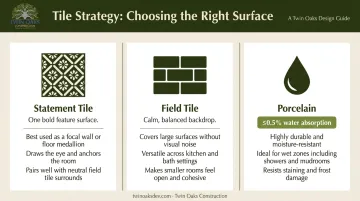
Tile choice sets the entire tone of the space. The same Houzz study found that 87% of homeowners used tile for shower flooring, with porcelain (39%) and ceramic (26%) as the top materials. Horizontal brick patterns led shower wall layouts at 31%.
A practical approach for guest baths:
- Statement tile: One feature surface (a patterned floor, a bold shower wall) adds personality without overwhelming a compact space
- Field tile: Clean, simple subway-style or large-format tile for the remaining walls creates a calm, balanced backdrop
- Porcelain: With water absorption of 0.5% or less, it's the most durable choice for moisture-prone areas
Layered Lighting
A single overhead fixture is the fastest way to make a bathroom feel institutional. Layered lighting creates atmosphere and function simultaneously.
The three-level approach:
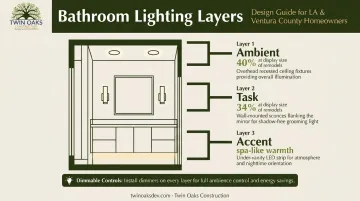
- Ambient — recessed ceiling lights for general illumination (used in 40% of bathroom remodels per Houzz 2025)
- Task — wall sconces flanking the mirror eliminate facial shadows; 34% of remodels include sconce upgrades
- Accent — under-vanity LED strips or backlit mirrors add warmth and a spa-like quality
Dimmable controls on overhead fixtures let guests adjust the room to suit early mornings or late nights — a low-cost addition that most homeowners wish they'd included from the start.
Statement Mirror and Design Cohesion
Once the lighting is right, the mirror becomes the room's visual anchor. An oversized or sculptural mirror reflects light to expand the space and draws the eye to the vanity. Match the frame finish to other hardware in the room — brushed nickel, matte black, or antique brass — for a pulled-together result.
Style consistency ties it all together. A guest bath that reads modern in a transitional home feels like a separate space rather than part of the whole. Current trends break down as:
- Transitional — 22% of bathroom remodels (blends classic and contemporary)
- Contemporary — 18% (clean lines, minimal ornamentation)
- Modern — 16% (bold geometry, stark contrasts)
Your home's existing aesthetic should drive the choice, not trend rankings. A well-matched guest bath feels intentional; a mismatched one just feels unfinished.
Smart Storage and Space-Saving Solutions
Open vs. Concealed Storage
The most common frustration in guest bathrooms isn't layout — it's not knowing where to put things. Two types of storage solve different problems:
- Open storage (floating shelves, towel bars, woven baskets): Items guests need to find quickly — hand towels, soap, extra toilet paper
- Concealed storage (vanity drawers, medicine cabinets, push-to-open cabinetry): Cleaning supplies, backup toiletries, anything that shouldn't be visible
Both types are necessary. A guest bathroom with only concealed storage feels sterile; one with only open shelving looks cluttered within a day.
Vanity Options for Smaller Spaces
Houzz 2025 reports that 47% of homeowners select vanities 48 inches wide or less — a strong indicator of how prevalent compact spaces are. The right vanity choice depends on your square footage:
| Vanity Type | Best For | Trade-off |
|---|---|---|
| Floating/wall-mounted | Small full baths | Less storage, shows floor space |
| Corner vanity | Tight layouts with awkward angles | Limited counter space |
| Pedestal sink | Compact powder rooms | Requires nearby shelving for storage |
Using Vertical Space
In a guest bath, the walls above eye level are prime real estate. Options:
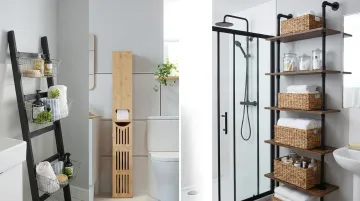
- Floor-to-ceiling shelving with uniform bins or wicker baskets
- Over-the-toilet cabinets (these can free up 10–15 square feet of unused wall space without touching your floor plan)
- Linen towers in corners that would otherwise go unused
Uniform containers — even inexpensive ones — are what make vertical storage look intentional rather than improvised.
Pocket Doors and Sliding Hardware
Once the walls are working harder, the next place to reclaim space is the door swing itself. A standard door clears 9–12 square feet of floor area — in a compact guest bath, that's room for a linen tower or an extra vanity. Pocket doors and sliding barn doors recover that footprint entirely. Choose soft-close or top-hung sliding systems rated for bathroom humidity; a door that sticks or rattles undercuts the entire renovation.
Choosing the Right Fixtures, Finishes, and Hardware
Fixtures and hardware do more than function — they signal care. A coordinated finish across faucets, towel bars, cabinet pulls, and mirror frames creates a cohesion that guests notice even if they can't quite name it.
Per Houzz 2025, bar pulls are the preferred handle type (58%), most commonly in brushed nickel (32%). That data makes brushed nickel a safe anchor finish — if you want to mix metals, keep it dominant (70–80%) and use a secondary accent sparingly, like a mirror frame or a single towel ring.
Flooring That Works
- Porcelain tile: Most reliable long-term choice; moisture-resistant, scratch-resistant, non-porous
- Matte or textured mosaic tile: Improves traction in wet areas — worth specifying for shower floors
- Luxury vinyl tile (LVT): Comfortable underfoot and moisture-resistant; works well outside the shower zone
Match the material to the use case: porcelain in the shower, LVT in a powder room.
Water-Efficient Fixtures
Upgrading the showerhead or faucet is one of the highest-value moves in a guest bathroom. EPA WaterSense labeled faucets use a maximum of 1.5 gpm and can reduce sink water flow by 30% or more. WaterSense showerheads operate at no more than 2.0 gpm — without sacrificing pressure.
Rainfall and handheld showerheads add a comfort-forward feel that guests associate with hotel-quality bathrooms — and neither requires major plumbing work to install.
Finishing Touches That Elevate the Guest Experience
The Hospitality Essentials
The difference between a clean bathroom and a welcoming one comes down to a few details:
- Fresh, plush towels (stacked or folded neatly, not just hung)
- A small basket with travel-size toiletries — toothpaste, lotion, razor, cotton pads
- Quality hand soap with a clean label (decant into a pump dispenser if needed)
- A non-slip bath mat that coordinates with the towels
These aren't decorating tips — they signal that someone thought about the guest before they arrived.
Décor Without Clutter
One or two considered décor choices beat a surface full of competing objects:
- A softly scented candle or essential oil diffuser (lavender or eucalyptus)
- A small plant or seasonal flowers
- One framed print that fits the room's color palette
Keep it minimal. In a small space, restraint is the design choice.
Accessibility as Hospitality
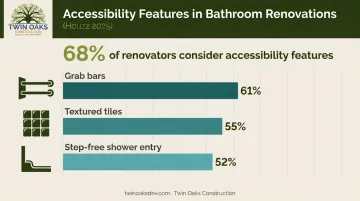
68% of bathroom renovators now consider accessibility features, according to Houzz 2025 — up four percentage points year over year. The most common features:
- Grab bars — 61%
- Non-slip flooring — 55%
- Low-curb showers — 52%
These features make the bathroom safer and more comfortable for guests of every age — not just those with mobility concerns. Grab bars installed at 33–36 inches from the floor (per AARP HomeFit guidance) can coordinate with your hardware finish and look intentional rather than clinical.
Plan for blocking in the walls during the remodel. Adding grab bars to walls without pre-installed blocking is a far more expensive retrofit.
Cosmetic Refresh vs. Full Remodel: When to Call a Professional
Identifying Your Project Type
| Category | What's Included | Who Does It |
|---|---|---|
| Cosmetic refresh | Paint, hardware swaps, new lighting, mirror, décor | DIY-friendly; no permits typically needed |
| Full remodel | Tile replacement, vanity replacement, plumbing reconfiguration, layout changes | Licensed contractor required |
The line between the two is usually plumbing and tile. If neither is moving, many updates are within reach of a motivated homeowner. Once plumbing shifts or tile comes off, the project belongs in professional hands.
What to Expect on Cost
Cost benchmarks vary significantly by scope and location:
| Source | Scope | Estimated Cost |
|---|---|---|
| HomeAdvisor (2025) | National average | $6,645–$17,638 (avg. $12,140) |
| Houzz (2025) | Small bath under 100 sq. ft. | $5,000 minor / $17,000 major |
| JLC Cost vs. Value (2024) | Midrange remodel, Los Angeles | $25,665 |
The LA premium is real. Regional labor and material costs push local projects well above national averages.
For LA and Ventura County homeowners, Twin Oaks Construction handles the full scope — design, materials, permitting, and execution — so you're not coordinating multiple contractors or guessing at compliance. Request a free consultation at twinoaksdev.com/contact or call (833) 621-7251.
Frequently Asked Questions
What is the average cost to remodel a guest bathroom?
For small bathrooms and powder rooms, costs typically range from $5,000 to $17,000 depending on scope, per Houzz and HomeAdvisor 2025 data. In the LA market, mid-range full remodels can reach $25,000 or more given regional labor costs. Material selections and whether plumbing moves significantly affect the final number.
What should I prioritize in a small guest bathroom remodel?
Focus first on lighting, storage, and a neutral color palette — these three changes deliver the most visual return without structural work. A well-lit vanity zone, organized open shelving, and a fresh, cohesive color scheme transform a small space faster than any single fixture upgrade.
Should a guest bathroom have a tub or just a shower?
A shower-only setup is the practical choice for most guest baths when square footage is limited. Removing a tub to expand the shower is increasingly common — 25% of renovators do so, per Houzz 2025 — though a freestanding tub can add a luxury feel if space and budget allow.
What colors work best for a guest bathroom?
Soft white, warm gray, light beige, and muted sage are consistently the most effective choices — universally appealing, they make small spaces feel larger and coordinate easily with any hardware finish or tile selection.
How long does a guest bathroom remodel take?
A cosmetic refresh typically takes a few days to a week; a full remodel involving tile, plumbing, or structural changes generally runs two to four weeks. Twin Oaks Construction outlines a clear project timeline at the start of every job so you know what to expect.