The catch? Manufactured home bathrooms aren't just smaller versions of site-built bathrooms. They have distinct structural quirks, moisture vulnerabilities, and material requirements that make them a genuinely different remodeling challenge. Skip those details, and you'll end up with a beautiful surface sitting on a rotting subfloor — or a new toilet that doesn't fit the rough-in.
This guide covers what makes manufactured home bathroom remodels unique, the best design upgrades, smart material choices, realistic cost expectations, and when to bring in a professional.
Key Takeaways
- Manufactured home bathrooms require moisture-resistant, lightweight materials due to structural limits and thinner wall construction
- Top upgrades include walk-in showers, floating vanities, LVT flooring, updated lighting, and fresh paint
- Costs range from $500 for cosmetic refreshes to $10,000+ for a full renovation
- Plumbing, electrical, and structural changes typically require permits — always check with your local building department
- Subfloor inspection is essential before any surface-level upgrade
What Sets Manufactured Home Bathroom Remodels Apart
Manufactured homes built after June 15, 1976 are governed by HUD's 24 CFR Part 3280, which covers structure, plumbing, electrical, and fire safety standards. That federal baseline shapes nearly every remodeling decision you'll make.
Structural and Material Constraints
Unlike site-built homes, manufactured homes are designed for transport — which means lighter framing, thinner wall construction, and stricter limits on what floors and walls can bear. Ceramic tile, for example, weighs roughly 4 lbs per square foot before accounting for mortar and backer boards. That adds up fast on walls and floors that weren't engineered for that kind of dead load.
The practical result: material choices matter more here than in a standard bathroom remodel. What works in a site-built home may stress or damage a manufactured home's structure.
Moisture Is the Hidden Enemy
HUD and DOE research identifies several moisture entry points specific to manufactured homes:
- Plumbing leaks that seep into belly boards and subfloors
- Exhaust fans that don't properly vent to the outside
- Bathroom wall panels that trap water behind them
- Inadequate ventilation that allows humidity to accumulate
Before touching any surface material, inspect the subfloor. Soft spots, discoloration, or any give underfoot signal water damage that must be addressed before new flooring goes down. Covering rot just accelerates the problem.
Plumbing Configuration
Standard toilet rough-ins are typically 12 inches, but some manufactured homes use a 10-inch rough-in. Before purchasing any replacement toilet, measure the existing rough-in from the wall to the center of the drain. Getting this wrong means returning a toilet that doesn't fit, or ending up with a fixture that sits awkwardly because someone forced the wrong size.
Quick check before you buy: Measure from the finished wall to the center of the floor drain bolt caps. That number determines your rough-in size.
Permits Still Apply
Even though HUD code governs a manufactured home's original construction, renovations involving plumbing, electrical, or structural changes still require permits. In California, HCD MH 604 (revised December 2024) requires permits and plan review for changes to DWV piping, water systems, electrical circuits, and wall modifications. Check with your local building department before starting any significant work.
A contractor with manufactured home experience, such as Twin Oaks Construction, can help you navigate California's permitting requirements and avoid costly mid-project corrections.
Top Manufactured Home Bathroom Design Ideas and Upgrades
Shower and Tub Upgrades
Swapping a bulky garden tub for a walk-in shower is one of the most popular changes in manufactured home bathroom remodels — and for good reason. It reclaims floor space, improves accessibility, and makes a small bathroom feel significantly larger.
Best options for manufactured homes:
- Prefab acrylic or fiberglass shower stalls — lightweight, purpose-built, and easier on wall structure than full tile installations
- Corner showers with clear glass doors — maximizes visual space in tight layouts
- Low-threshold entries — practical for accessibility and easier to clean
One important note: acrylic and fiberglass surrounds are specifically worth prioritizing here. A complete fiberglass wall system kit can weigh around 32 lbs total — a fraction of what a tiled surround adds once you account for backer board, mortar, and grout.
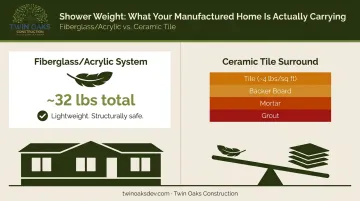
That weight consideration carries through every upgrade decision in a manufactured home — including what goes on your walls and floors.
Vanity, Sink, and Storage
Bulky builder-grade vanities eat floor space in rooms that don't have much to spare. Better alternatives:
- Floating or wall-mounted vanities with drawers — create a modern look and make cleaning easier
- Pedestal sinks — ideal for very small bathrooms where floor space is the priority
- Recessed wall niches built into existing wall cavities for toiletries
- Open shelving above the toilet for towels and everyday items
- Over-door hooks for robes and towels
These additions add real function without adding structural load.
Flooring
Old vinyl floors in manufactured homes crack, peel, and — more concerning — trap moisture underneath when the seal breaks. Luxury vinyl tile (LVT) or click-lock waterproof vinyl plank are the right replacements. They're moisture-resistant, easy to install without heavy adhesives, and far lighter than tile or stone alternatives.
Before laying anything new, inspect and repair the subfloor. Soft spots must be addressed first. A fresh floor over a damaged subfloor is money wasted.
Lighting, Ventilation, and Fixtures
Three relatively low-cost upgrades that have outsized impact:
- LED lighting above the mirror and at the ceiling makes small bathrooms feel brighter and more open. Backlit mirrors are a modern option that doubles as task lighting.
- Exhaust fan upgrade — ensure it vents fully to the outside, not just into wall or ceiling cavities. Poor ventilation is one of the primary drivers of mold in manufactured home bathrooms.
- Fixture finish update — replacing faucets, showerheads, and cabinet hardware with a unified finish (matte black, brushed nickel, or chrome) creates a cohesive, higher-end look for a few hundred dollars.
Walls, Paint, and Finishing Touches
Old plastic wall panels trap moisture behind them — a direct path to mold and rot. Replace them with beadboard or shiplap: lightweight, paintable, and straightforward to install.
For paint, use mold-resistant semigloss or moisture-resistant paint. Finish the space with:
- Light neutral tones — soft white, pale gray, or sage green to brighten a small room
- A statement mirror to reflect light and add visual depth
- Coordinated shower curtain and towels for a pulled-together look
- A small plant to add life without adding clutter
Best Materials for Manufactured Home Bathrooms
Material selection in a manufactured home bathroom comes down to three criteria: lightweight, moisture-resistant, and durable. Here's how that plays out in practice:
| Surface | Recommended | Avoid |
|---|---|---|
| Flooring | LVT, waterproof vinyl plank | Real hardwood, carpet |
| Shower/tub surround | Fiberglass or acrylic panels | Heavy ceramic or stone tile |
| Wall substrate (wet areas) | Moisture-resistant drywall, cement board, or DensShield (2.0 lbs/sq ft) | Standard drywall |
| Wall paint | Mold-resistant semigloss | Flat or eggshell paint |
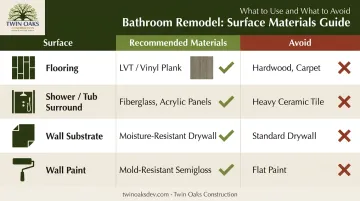
Ceramic tile weighs approximately 4 lbs per square foot before installation, which is why wall tile poses a real structural risk in manufactured homes. Lightweight acrylic and fiberglass panel systems avoid this problem entirely.
Choosing the right materials also means choosing the right sizes. Some products are manufactured specifically for mobile and manufactured home use, including tubs sized for a 54" × 27" footprint and toilets with 10-inch rough-ins. Purpose-fit products eliminate guesswork and installation complications. Always verify dimensions against your existing opening before ordering anything.
How Much Does a Manufactured Home Bathroom Remodel Cost?
Cost depends on scope, material choices, labor rates, and what gets discovered once walls or floors come up. Here's a realistic breakdown:
| Tier | Typical Scope | Estimated Range |
|---|---|---|
| Cosmetic refresh | Paint, fixtures, hardware, mirror replacement | $300–$1,500 |
| Mid-range remodel | New flooring, vanity, shower surround, lighting | $3,000–$7,000 |
| Full renovation | New shower or tub, vanity, plumbing updates, electrical, flooring | $8,000–$15,000+ |
For context, HomeAdvisor's 2025 data puts the general bathroom remodel range at $6,645–$17,637 for site-built homes — manufactured home remodels often run lower depending on scope, but underlying system issues can push costs higher.
What a $10,000 Budget Covers
At $10,000, a manufactured home bathroom remodel can include:
- New walk-in shower or tub replacement
- Full floor replacement with LVT or waterproof vinyl plank
- New vanity, sink, and faucet
- Updated fixtures and cabinet hardware throughout
- New lighting and upgraded exhaust fan
- Fresh paint
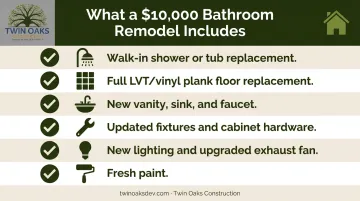
That's a near-complete transformation — and one that meaningfully improves both daily comfort and resale competitiveness.
Hidden Costs to Plan For
Several factors can push a remodel over budget:
- Subfloor rot or water damage discovered during demolition
- Outdated plumbing or electrical that needs upgrading to current code before new fixtures can be installed
- Premium material upgrades chosen during the project
NARI recommends budgeting a 10%–20% contingency on top of your estimated project cost. In manufactured home bathrooms — where hidden moisture damage is common — having that buffer is less optional and more essential.
Is the Investment Worth It?
For most homeowners, yes. While manufactured-home-specific ROI data is limited, the JLC 2025 Cost vs. Value Report shows midrange bathroom remodels recouping approximately 80% of costs at resale for site-built homes. An updated bathroom raises your home's market position — which matters in a competitive resale environment where buyers compare manufactured homes directly against entry-level site-built options.
DIY vs. Hiring a Professional Remodeler
What Homeowners Can Tackle
These tasks are genuinely DIY-friendly for most homeowners with basic skills:
- Painting walls and ceilings
- Replacing faucets, showerheads, and cabinet hardware
- Installing peel-and-stick or click-lock LVT flooring
- Swapping mirrors and light fixtures
- Adding shelving or over-door storage
Even these tasks require careful prep — test for moisture damage before laying flooring, and turn off circuits before touching any lighting.
What Requires Licensed Professionals
Don't attempt these without a licensed contractor:
- Plumbing rerouting or DWV changes — needs a licensed plumber and, in California, HCD permit and plan review
- Electrical panel work or new circuits — requires a C-10 licensed electrical contractor
- Structural wall modifications — involves permits, engineered plans, and a licensed contractor
- Subfloor replacement — physically demanding work with real structural consequences
- Shower or tub installation with drain connections — requires certified plumbing and proper waterproofing
Manufactured homes have specific construction nuances — unique plumbing configurations, HUD code compliance, weight limitations — that a general handyman unfamiliar with this type of build can easily overlook. That's where working with a contractor who knows the territory matters.
Twin Oaks Construction has handled remodeling projects across LA and Ventura Counties for over 20 years, including the code and structural considerations that manufactured home bathrooms require. Call (833) 621-7251 to schedule a consultation.
Frequently Asked Questions
Can you remodel a bathroom in a manufactured home?
Yes — manufactured home bathrooms can be fully remodeled, from cosmetic updates to complete fixture and layout changes. The main constraints are weight limits on materials, moisture-resistant material requirements, and permit obligations for any structural, plumbing, or electrical work.
How much does it cost to remodel a bathroom in a manufactured home?
Costs range from a few hundred dollars for cosmetic refreshes to $10,000 or more for a full renovation. The condition of existing systems — subfloor, plumbing, electrical — significantly affects the final number, sometimes adding unexpected costs when hidden damage surfaces.
What does a $10,000 manufactured home bathroom remodel look like?
A $10,000 budget typically covers a new walk-in shower or tub, full floor replacement, updated vanity and sink, new fixtures and lighting throughout, an upgraded exhaust fan, and fresh paint.
Is remodeling a manufactured home worth it?
Yes. Bathroom upgrades consistently improve daily comfort and increase resale value. Even minor cosmetic improvements lift the asking price and make the home more competitive on the market.
Do I need a permit to remodel a bathroom in a manufactured home?
Permits are required for any work involving plumbing, electrical, or structural changes. In California, HCD governs these requirements for manufactured homes, but rules also vary by municipality. Check with your local building department before starting significant work.
What materials work best for manufactured home bathrooms?
Lightweight and moisture-resistant materials are the priority. Good options include:
- LVT or waterproof vinyl plank for floors
- Fiberglass or acrylic surrounds for showers and tubs
- Moisture-resistant drywall or cement board behind wet areas
- Mold-resistant semigloss paint on walls
Avoid ceramic or stone tile on walls and real hardwood or carpet in wet areas.