The good news: a thoughtful remodel can transform a cramped, outdated kitchen into a functional, attractive space without the costs associated with site-built home renovations. National cost data from HomeGuide puts mobile home kitchen renovations between $3,000 and $20,000 — a wide range that reflects how much flexibility you actually have.
This guide covers everything you need to make smart decisions: what makes mobile home kitchens structurally different, realistic cost breakdowns for the Southern California market, the best upgrade ideas, a step-by-step planning process, and when to call a licensed professional instead of going DIY.
Key Takeaways
- Mobile home kitchens have HUD-regulated structural limits (40 psf floor load, 7 ft ceiling height minimum) that directly affect material and layout choices
- Cosmetic upgrades typically don't need permits in LA County; plumbing, electrical, and structural changes do
- Keeping the original layout is the single biggest cost-saving decision you can make
- Vinyl plank flooring, laminate countertops, and cabinet repainting deliver the best return per dollar spent
- Always measure before ordering — standard residential cabinets can work, but must be verified against your home's specific rough opening dimensions
What Makes Mobile Home Kitchen Remodeling Different
Mobile homes aren't simply smaller versions of site-built houses. They're engineered under a completely different regulatory framework: the HUD Manufactured Home Construction and Safety Standards. That distinction shapes every remodeling decision you'll make.
Structural Constraints You Can't Ignore
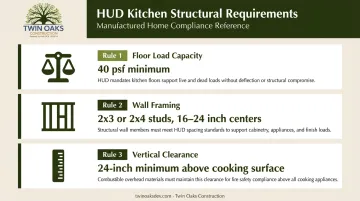
Three structural rules govern what you can and can't do in a manufactured home kitchen:
- Floor load capacity: HUD sets a 40 psf minimum floor live load. That's sufficient for most layouts, but not when you're considering 3 cm quartz countertops, which weigh roughly 20 lbs per square foot, or granite slabs. These materials remain viable options — they just require verification that your subfloor, cabinet bases, and supporting structure can handle the additional load.
- Wall framing: According to Clayton Homes, manufactured home interior studs are typically 2x3 or 2x4, framed on 16-inch or 24-inch centers, with wallboard ranging from 5/16 to 1/2 inch thick. Locate studs precisely before anchoring any upper cabinets or open shelving.
- Vertical clearance: HUD requires at least 24 inches between the cooking surface and the bottom of any combustible cabinets above it — a non-negotiable that directly limits your cabinet layout options.
The Kitchen Work Triangle in Compact Spaces
The work triangle — the path between your sink, stove, and refrigerator — matters more in a mobile home kitchen than in almost any other context. When space is tight, an inefficient triangle means constantly crossing your own path while cooking.
The NKBA recommends that work triangle legs not be interrupted by obstacles. In a mobile home kitchen, this often means:
- Keeping the sink, stove, and refrigerator on the same or adjacent walls
- Avoiding layouts where the refrigerator is placed across the room from the prep area
- Prioritizing functional flow over aesthetic symmetry when the two conflict
Cabinet Sizing: Standard vs. Mobile Home Dimensions
Standard residential base cabinets run 34½ to 36 inches tall and 24 to 30 inches deep. These can often be used in manufactured homes, but rough opening dimensions in your specific home may differ from what you'd find in a site-built kitchen.
Ceiling height restrictions — HUD's 7-foot minimum — can also limit wall cabinet height options. Always measure your actual rough openings before ordering anything.
Mobile Home Kitchen Remodel Cost Breakdown
Costs vary significantly based on scope. The ranges below are anchored to national mobile home-specific data, anchored as starting benchmarks: LA/Ventura bids typically run 15–30% above these figures due to higher regional labor rates.
Remodel Tiers at a Glance
| Tier | Estimated Cost Range | What's Typically Included |
|------|---------------------|--------------------------|
| Basic Refresh | $3,000 – $6,000 | Paint, hardware swaps, peel-and-stick backsplash, new lighting fixtures |
| Mid-Range Remodel | $6,000 – $15,000 | New countertops, flooring, updated appliances, cabinet refinishing or door replacements |
| Full Remodel | $15,000 – $25,000+ | Layout changes, new cabinetry, plumbing/electrical upgrades, structural work |
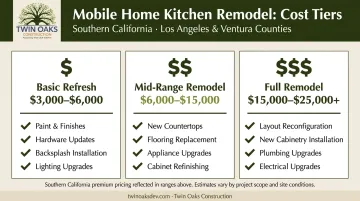
National benchmarks from Braustin Homes 2024 renovation cost data and HomeGuide. Southern California projects will typically fall at the higher end of each range.
Biggest Cost Drivers
These four factors consistently push budgets toward the high end of each tier:
- Moving drain or supply lines requires opening the floor in most manufactured homes — plumbing reroutes are among the costliest single-line items
- Adding circuits for new appliances or upgrading panels triggers HCD permit requirements and must be handled by a licensed electrician
- Soft spots from past moisture damage must be fixed before any flooring goes down; HCD exempts repairs under 4 sq ft, but larger subfloor work requires a permit
- Keeping the original layout is the single most effective cost control — skipping plumbing and electrical reroutes alone can save thousands
4 Practical Ways to Save Money
- Repaint cabinets instead of replacing them: a professional paint job on existing boxes with new hardware delivers a near-identical look for a fraction of the cost
- Replace only the door fronts: if the cabinet boxes are structurally sound, new Shaker-style doors and drawer fronts transform the look without full demolition
- Choose peel-and-stick or prefab materials: peel-and-stick backsplash tile, prefab countertops, and floating vinyl plank flooring are built for fast, affordable installation
- Sequence the work correctly: cosmetic upgrades done before finding a subfloor problem means doing everything twice — tackle structural issues first, aesthetics last
Top Mobile Home Kitchen Remodel Ideas
Cabinets and Storage
The cabinet options that deliver the most value per dollar:
- Repaint existing cabinets in a two-tone scheme — light uppers (white, cream, or sage) with darker lowers (navy, charcoal, or forest green) create visual depth and feel intentional rather than dated
- Replace door fronts only — keeps the existing box structure while completely changing the kitchen's personality; Shaker-style fronts work in both modern and transitional kitchens
- Swap hardware — brushed brass, matte black, or satin nickel pulls cost $2–$8 per piece and take under an hour to install; it's one of the fastest visual upgrades in any kitchen
- Add open shelving in one section — it avoids boxing in compact spaces and works well on walls with structural posts or corners that don't fit standard cabinet runs
Countertops and Backsplash
Material choice here is both aesthetic and structural. Weight matters.
| Material | Installed Cost (National) | Notes for Mobile Homes |
|---|---|---|
| Laminate | $19 – $45/sq ft | Lightest option, wide color range, DIY-friendly |
| Butcher block | $50 – $100/sq ft | Adds warmth, workable weight, requires sealing |
| Quartz | $59 – $130/sq ft | Premium look; 3 cm slabs weigh ~20 lbs/sq ft — verify floor load first |
| Granite | $43 – $140/sq ft | Similar weight concern to quartz; confirm subfloor support |
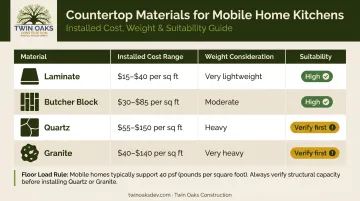
Cost data from Home Depot's countertop installation cost guide.
A peel-and-stick or ceramic tile backsplash is one of the highest-ROI upgrades in a mobile home kitchen. It protects the wall from moisture and grease, and subway tile or glass tile in a classic white or warm gray updates the look noticeably without significant cost.
Flooring and Lighting
Flooring: Water-resistant vinyl plank is the clear top choice for manufactured home kitchens. It's lightweight, moisture-resistant, and installs as a floating floor over most existing subfloors without adding structural stress.
Luxury vinyl plank (LVP) is a step up — thicker wear layer, more realistic wood or stone visuals, same lightweight profile. LVP installation runs $6–$20 per sq ft nationally, including labor.
Lighting: A single overhead fixture makes a small kitchen feel like a cave. Three changes make an immediate difference:
- Replace a ceiling fixture with recessed lighting or a pendant over the main prep area
- Add LED strips under upper cabinets for task lighting — they cost $30–$80 for a full run and make cooking significantly easier
- Maximize natural light by replacing heavy window treatments with lighter alternatives or removing them entirely
Planning Your Mobile Home Kitchen Remodel: Step-by-Step
Step 1 — Assess and Measure Everything First
Before purchasing a single item, take precise measurements of the entire kitchen: ceiling height, cabinet depth, appliance clearances, and the rough opening dimensions for any cabinet or appliance you plan to replace. While you're at it, check for:
- Soft spots in the subfloor (step slowly across the entire floor)
- Water stains or discoloration under the sink and around the dishwasher
- Any wall damage or delamination near the stove
Resolve any structural or moisture issues before cosmetic work begins.
Step 2 — Set a Budget with a Contingency
Build a 20% contingency buffer into your budget from the start. Mobile home kitchens are particularly prone to hidden moisture damage and outdated wiring, so that cushion often gets used.
Prioritize upgrades by impact: flooring and lighting typically deliver more visible improvement per dollar than countertops.
Step 3 — Understand Permit Requirements
In California, permit requirements vary by jurisdiction — and manufactured homes add another layer:
- LA County: Painting, tiling, cabinets, countertops, and similar finish work are exempt from permits. Plumbing reroutes, electrical panel work, and structural modifications require permits.
- California HCD: Any alteration to a manufactured home's plumbing, electrical, structural, or mechanical systems requires an HCD MH 415 permit before work begins. Like-for-like replacements of certain items (range hoods, garbage disposals without new circuits) may be exempt.
- Ventura County: Building permits are required for most construction alterations. Check with Ventura County Building and Safety before starting any work beyond finish upgrades.
Twin Oaks Construction handles permit coordination across LA and Ventura Counties, including HCD filings for manufactured homes, so homeowners don't have to navigate the process alone.
Step 4 — Choose Materials Suited to Manufactured Home Construction
Manufactured homes have tighter tolerances and lighter structural systems than site-built homes. Keep these material guidelines in mind:
- Use lightweight, moisture-resistant materials wherever possible
- Confirm cabinet dimensions against actual rough opening measurements before ordering
- For countertops heavier than laminate, verify the subfloor and cabinet base can support the load
Step 5 — Sequence the Work Correctly
Doing work out of order is the most common cause of expensive rework. The correct sequence:
- Structural repairs
- Plumbing and electrical rough-in
- Flooring
- Cabinets and countertops
- Appliances
- Backsplash and hardware
- Paint and lighting
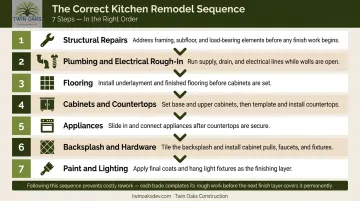
Paint and lighting finish the list for a reason: cosmetic work done before rough-in is complete will be damaged or covered during later steps.
DIY vs. Hiring a Professional
Tasks That Work Well as DIY
These upgrades require basic tools and carry low risk of structural damage:
- Painting cabinets and walls
- Replacing cabinet hardware
- Installing peel-and-stick backsplash
- Swapping light fixtures (with the breaker off)
- Laying floating vinyl plank flooring
Starting in 2025, California raised the minor-work exemption to $1,000 — meaning unlicensed work under that threshold is permitted only when no employees are hired and no building permit is required.
When You Need a Licensed Contractor
The following work requires a licensed professional in California — no exceptions:
- Moving or adding plumbing lines
- Upgrading electrical panels or adding circuits
- Any structural wall modifications
- Installing built-in appliances that require new electrical circuits
- Any work that triggers HCD or county permit requirements
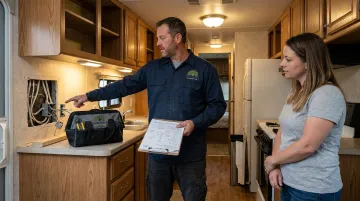
Unpermitted work in these categories can create serious problems at resale and with homeowner's insurance. CSLB warns that unlicensed contractors performing permit-required work face fines up to $15,000 and potential jail time — and the homeowner bears responsibility for work done under their authorization.
For homeowners in LA or Ventura County, working with a licensed contractor who knows local HCD requirements takes that risk off the table. Twin Oaks Construction has handled permitted kitchen remodels across both counties for over 20 years — managing everything from permit applications to final inspections. Reach out at (833) 621-7251).
Common Mistakes to Avoid
Measure before you order — Standard cabinets and appliances may not fit your mobile home's specific rough openings. Always confirm dimensions before purchasing. Returns are costly and delays are frustrating.
Keep the refrigerator away from the stove — Heat from the range forces the compressor to work harder, raising energy bills and shortening appliance life. ENERGY STAR recommends separating refrigerators from heat sources, including ovens and dishwashers.
Don't remodel past the home's resale ceiling — According to the Manufactured Housing Institute, manufactured homes typically cost less than one-third of site-built homes. A $30,000 kitchen remodel in an $80,000 home rarely returns its investment. Focus on functional upgrades and broadly appealing materials rather than luxury finishes.
Frequently Asked Questions
How much does it cost to remodel a mobile home kitchen?
Costs vary significantly by scope:
- Cosmetic refresh (paint, hardware, lighting): $3,000–$6,000
- Mid-range remodel (countertops, flooring, cabinets): $6,000–$15,000
- Full remodel (layout changes, plumbing, electrical): $20,000+
Southern California labor rates push costs toward the higher end of each range.
Can you put regular kitchen cabinets in a mobile home?
Yes, but fit and structural capacity matter. Standard cabinets must be sized against your rough opening dimensions, ceiling height, and wall framing — and the floor and wall studs should be confirmed to handle the added weight before installation.
What kitchen colors are trending for 2026?
For small mobile home kitchens, softer sage green and warm white are strong choices — they open up tight spaces without feeling stark. On the trend side, Behr's 2026 Color of the Year is Hidden Gem (smoky jade green), Benjamin Moore chose Silhouette (warm gray), and Sherwin-Williams went with Universal Khaki.
Do you need a permit to remodel a mobile home kitchen in California?
Cosmetic work — painting, new hardware, cabinet replacements, countertops, and flooring — is generally exempt from permits in LA County. However, any plumbing, electrical, or structural work on a manufactured home requires an HCD alteration permit, and county permits may also apply. Check with your local building department before starting.
What is the best flooring for a mobile home kitchen?
Water-resistant vinyl plank or luxury vinyl plank (LVP) is the top choice. It's lightweight, durable, moisture-resistant, and installs as a floating floor without adding structural stress to the subfloor — a critical advantage in manufactured home construction.
How long does a mobile home kitchen remodel take?
A basic cosmetic refresh can be completed in a few days to a week. A mid-range remodel with new countertops, flooring, and cabinet work typically takes two to four weeks. A full remodel involving plumbing, electrical, or structural changes can run six to ten weeks or longer, depending on permit timelines, contractor availability, and material lead times.