
Bathrooms are uniquely unforgiving. Tight square footage means every measurement matters. Plumbing, electrical, and waterproofing systems all intersect in a small space, and errors in any of them tend to stay hidden — until they cause mold, structural damage, or a failed inspection.
This guide covers the five most costly bathroom remodel mistakes, with specific guidance for LA and Ventura County homeowners navigating local costs, codes, and conditions.
Key Takeaways
- Start with a written plan, line-item budget, and a 10–15% contingency fund before demolition begins
- Plumbing, ventilation, and waterproofing are the most expensive systems to fix after the fact
- Choose materials that balance looks with moisture resistance, slip resistance, and easy upkeep
- Finalize layout, lighting, and storage decisions before walls close
- DIY plumbing and electrical work risks code violations, failed inspections, and safety hazards — hire licensed pros
Mistake 1: Starting Without a Clear Plan or Realistic Budget
Most bathroom remodel failures trace back to one root cause: decisions made without a plan. When homeowners skip the planning phase, they face cascading delays, scope creep, and budget overruns that could have been avoided.
A complete bathroom plan must include:
- A scaled floor plan with all fixture clearances verified
- A sequenced trade schedule (demo → plumbing rough-in → electrical → waterproofing → tile → fixtures → finishes)
- A locked-in material list before any demolition begins
That last point matters more than most homeowners expect. Starting demo before materials are confirmed leads to work stopping mid-project while backordered tile or discontinued fixtures are tracked down.
Why Bathroom Remodels Go Over Budget
Hidden costs catch homeowners off guard repeatedly. The most common ones:
- Permit and inspection fees — LA and Ventura County permits are required for plumbing changes, electrical modifications, and structural work
- Plumbing upgrades — corroded supply lines, drain work, and code compliance for older homes
- Electrical panel upgrades — additional GFCI circuits are required by California code in all bathroom receptacle locations within 3 feet of a basin
- Moisture barrier installation — often discovered to be absent or inadequate after demolition
- Structural repairs — subfloor rot, framing damage, and wall issues exposed during demo
Luxury fixtures carry hidden infrastructure costs too:
- Freestanding cast iron tubs require reinforced flooring
- Rain showerheads need upsized supply lines
- Steam showers require dedicated electrical circuits and fully sealed enclosures
Budget an additional 20–40% on top of the fixture price to cover these infrastructure requirements.
How to Build a Realistic Budget
For context, the 2024 Cost vs. Value report for Los Angeles put midrange bathroom remodel costs at $25,665 and upscale remodels at $80,071. Angi's LA-specific data puts the range at $13,185 to $27,072 for a standard remodel, with full gut renovations reaching $51,685 to $153,203.
Build your budget as a line-item breakdown:
| Category | Notes |
|---|---|
| Demo | $1,000–$2,300 typically |
| Plumbing | Often 20–30% of total; higher if lines move |
| Electrical | GFCI, dedicated circuits, panel upgrades |
| Tile & materials | Highly variable by selection |
| Fixtures | Showers $200–$15,000; tubs $300–$11,000 |
| Labor | 40–65% of total budget — the largest category |
| Permits | $100–$1,000+ depending on scope |
| Contingency | Minimum 10–15% — NARI recommends 10–20% |
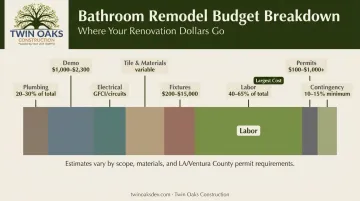
Don't treat the contingency line as padding — demo almost always uncovers something unexpected, and 10–15% is the industry-standard buffer for a reason.
Mistake 2: Neglecting Plumbing, Ventilation, and Waterproofing
Moisture control failures are often invisible until they cause mold, structural damage, or a failed home inspection. By that point, repair costs far exceed what prevention would have cost.
The Hidden Costs of Poor Moisture Control
Inadequate ventilation traps moisture in walls, behind tile, and under flooring. The consequences compound over time: mold growth, wood rot, subfloor deterioration, and peeling finishes. Mold remediation for bathroom-specific cases typically runs $500–$1,000, but behind fixtures and inside walls, costs can exceed $8,000.
The most common waterproofing mistake is treating tile as the moisture barrier. Tile is not waterproof; grout and tile joints allow water transmission.
A proper waterproof membrane must be installed behind tile in all wet areas: shower walls, shower floors, and tub surrounds. Skipping this step to save money or time is the single most expensive shortcut a bathroom remodel can take.
What Proper Ventilation and Drainage Actually Require
Exhaust fan sizing matters more than most homeowners realize. The Home Ventilating Institute recommends:
- Bathrooms up to 50 sq. ft.: 50 CFM minimum
- Bathrooms 50–100 sq. ft.: 1 CFM per sq. ft.
- Larger bathrooms: add 50 CFM per toilet, shower, and bathtub
Undersized fans are common even in recently remodeled bathrooms. Humidity-sensing or timer-controlled fans outperform manual switches because most people turn the fan off when they leave, not after moisture has actually cleared.
Shower floor drainage has specific code requirements:
- IRC requires finished shower floors to slope not less than 1/4 inch per foot toward the drain
- Maximum slope is 1/2 inch per foot
- Linear drains require specific slope configurations engineered in advance — they cannot be retrofitted after tile is set
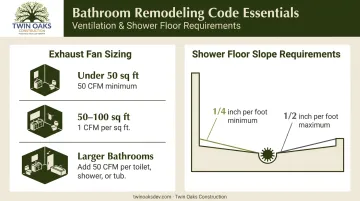
Drain hardware must be selected before tile layout is finalized. The drain position determines everything about tile pattern, cuts, and slope direction.
Pre-existing plumbing issues must be addressed before finish work begins. Tiling over problems only delays — and amplifies — the cost of fixing them. Watch for:
- Corroded or aging pipes that could fail behind finished walls
- Slow drains signaling blockages or improper slope
- Low water pressure indicating supply-line problems upstream
Mistake 3: Choosing Materials That Prioritize Looks Over Performance
A bathroom that photographs beautifully is not the same as one that holds up. The materials that trend on Instagram often struggle with years of moisture, cleaning products, and daily foot traffic — and that gap is where most renovation regrets start.
Tile Selection Mistakes
- Polished marble and smooth large-format tiles are slip hazards on shower floors. ANSI A137.1 requires a DCOF rating of 0.42 or greater for tile walked on when wet. Polished and semi-polished surfaces are not recommended for wet areas.
- Light-colored grout in wet areas stains quickly and requires intensive, ongoing maintenance. Choose grout colors that reflect realistic cleaning habits, not the day the bathroom is photographed.
- Natural stone requires periodic sealing and is vulnerable to acidic cleaners. Vinegar, lemon-based products, and most commercial bathroom cleaners will damage marble, limestone, and travertine on contact.
Fixture Finish Durability in LA's Hard Water
Los Angeles water hardness averages 9.8 grains per gallon (168 mg/L) according to LADWP, placing it firmly in hard water territory. Matte black and brushed gold fixtures look striking but show mineral deposits and water spots heavily under these conditions.
Before committing to a finish, confirm:
- Durability ratings from the manufacturer for hard water environments
- Recommended cleaning products and whether they match what you'll actually use
- Maintenance requirements (most manufacturers recommend drying fixtures after each use to prevent buildup)
Over-Engineered Shower Features
Luxury shower features that sound appealing in planning often create daily friction in use:
- Open multi-head showers without enclosures lose heat quickly in cooler weather
- Rain showerheads cannot be used without fully wetting hair — California also limits showerhead flow to 1.8 gpm, which affects rain-head performance
- Steam showers require a fully sealed enclosure, steam-rated tile and grout with less than 0.5% absorption, sloped ceilings (minimum 2 inches per foot), and regular intensive cleaning
The question to ask before adding any of these features: does this match how you actually use a shower every day, or does it match how a showroom makes it look?
Mistake 4: Ignoring Layout, Lighting, and Storage
Layout mistakes are among the hardest and most expensive to correct after construction. A door that swings into a vanity or a toilet with inadequate side clearance becomes a permanent daily frustration.
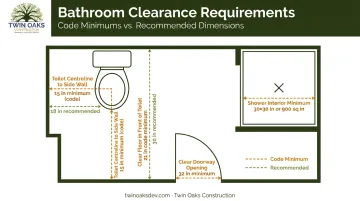
Critical clearances to verify before walls close:
- Toilet centerline to side wall: 15 inches minimum (code), 18 inches recommended per NKBA
- Clear floor space in front of toilet: 30 inches recommended, 21 inches code minimum
- Shower interior minimum: 30 x 30 inches or 900 square inches
- Clear doorway opening: 32 inches minimum
Verify all fixture heights — particularly showerhead height — before rough-in is complete.
Lighting and Storage: Plan Before Rough-In
Lighting is the most commonly underplanned element. A single overhead fixture creates shadows on faces at the mirror — the opposite of what task lighting should do. Bathrooms need:
- Ambient overhead lighting for general illumination
- Task lighting flanking the mirror at eye level — not above it, where it creates downward shadows
- Switch placement planned before electrical rough-in
NKBA guidelines require fixtures in tub and shower spaces to be rated for damp or wet locations. Hanging fixtures are prohibited within 3 feet horizontally and 8 feet vertically from a tub rim or shower threshold.
Storage is consistently deprioritized during planning and leads to cluttered bathrooms. These three elements must be framed before tile installation:
Storage is consistently deprioritized during planning and leads to cluttered bathrooms. Each of these must be framed before tile goes in:
- Recessed shower niches
- Medicine cabinets
- Built-in vanity storage
Retrofitting any of them afterward typically means tile demolition — an expensive outcome that proper upfront planning avoids. Twin Oaks Construction plans storage and layout together at the design stage, which is why homeowners across LA and Ventura Counties don't face these surprises mid-project.
Mistake 5: DIY Overreach and Hiring the Wrong Contractor
What's Genuinely High-Risk for DIY
Some bathroom work is appropriate for capable homeowners. These tasks are not:
- Plumbing modifications — moving drain lines, supply rough-in, or fixture relocation
- Electrical work — GFCI circuits, dedicated circuits, and panel upgrades required by California code
- Waterproofing systems — improper membrane installation is invisible until water damage appears
- Wet-area tile installation — slope, substrate preparation, and grout selection all affect long-term performance
Errors in these areas don't just look bad. They create safety hazards, code violations, and insurance liabilities. In California, the Transfer Disclosure Statement requires sellers to disclose room modifications made without necessary permits — unpermitted work creates real liability at resale.
Contractor Vetting Mistakes
The California Contractors State License Board received 20,092 complaints in 2025, with consumers recovering more than $30.2 million in restitution and corrected work. Avoid these contractor selection mistakes:
- Check CSLB license status, insurance, and bathroom-specific references — not just the bid price
- Get everything in writing: California law requires a written home improvement contract for work over $500 in combined labor and materials
- Confirm permits will be pulled before work starts; permitted work protects you during inspection and at resale
Twin Oaks Construction has handled bathroom remodels across LA and Ventura County for over 20 years. That depth of experience means hidden issues get caught before they become change orders — and the permit process gets managed without putting the burden on you.
Frequently Asked Questions
What is the biggest expense in a bathroom remodel?
Labor is consistently the largest cost category, representing 40–65% of total bathroom remodel costs. After labor, tile and materials and plumbing work are the next largest categories. Moving plumbing lines or upgrading an electrical panel can dramatically increase the total project cost.
What is the hardest part of a bathroom remodel?
Plumbing and layout changes are the most complex aspects of a bathroom remodel. They require licensed professionals, must be completed in the correct sequence before walls close, and are the most costly to correct if done incorrectly because accessing them later requires full tile demolition.
What are common bathroom renovation mistakes to avoid?
The top pitfalls: starting without a complete plan and contingency budget, skipping proper waterproofing behind tile, choosing materials for appearance over durability and maintenance, and attempting plumbing or electrical work without a license.
How much contingency budget should I set aside?
NARI recommends a minimum 10–20% contingency on top of your estimated project cost. Demolition almost always uncovers something unexpected — water damage, outdated wiring, or corroded pipes that weren't visible before work began.
Do I need permits for a bathroom remodel in California?
Yes. Any work involving plumbing changes, electrical modifications, or structural alterations requires a permit. In Los Angeles, LADBS online permits cover basic repair and replacement only; wall or opening changes and new plumbing or electrical penetrations must go through the LADBS Construction Services Center.
How long does a typical bathroom remodel take?
A full bathroom remodel typically takes 3–6 weeks once construction begins. The planning and material procurement phase before demolition often adds several additional weeks — and delays from hidden issues or back-ordered materials should be factored into your timeline.